
A Return to Painting the Figure
In 2013, I returned to making figure paintings. In truth, I surprised myself for wanting to do so, given that I had spent many years producing highly abstracted work. How that came about requires some explanation.
Student Years and the Life Class
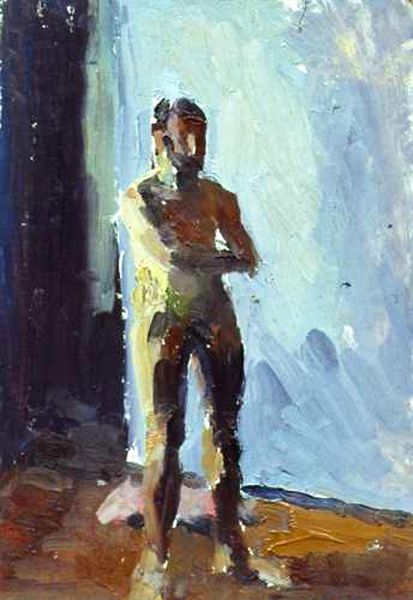
Life Class, Camberwell Art School, 1981
I spent five wonderful years studying art at Camberwell Art School. The first 18 months were devoted to painting and drawing directly from observation, until I fell under the spell of American painting and in particular Abstract Expressionism.
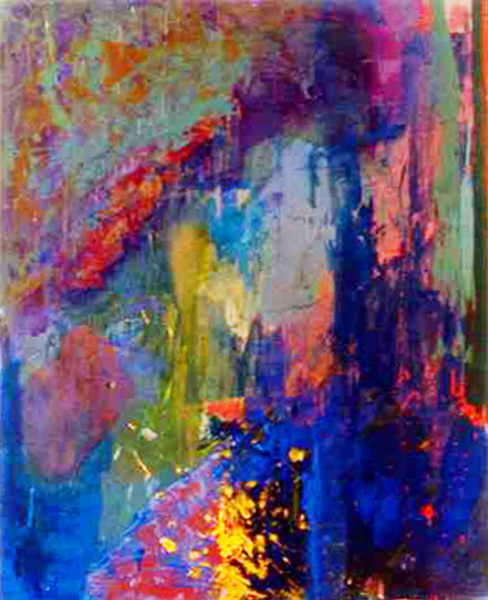
Student painting, acrylic on cotton duck, 1983, Private Collection
At that point, any thoughts of painting the human figure seemed an anathema for a modern artist.
Later, I did make paintings that carried hints of figuration, and even some portraiture, but that was a long way from what eventually transpired.
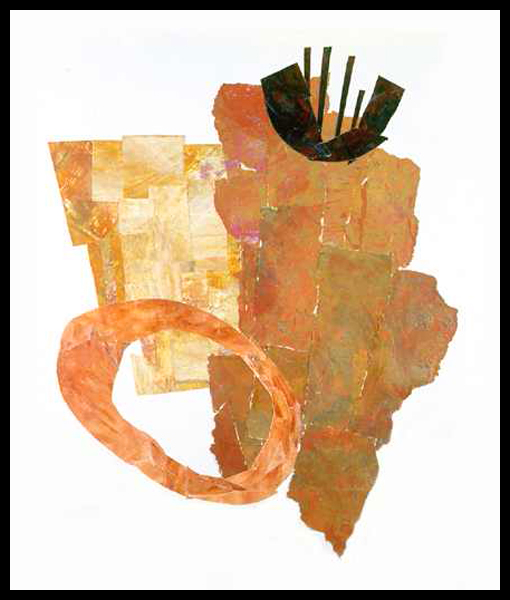
West, 1990, Collaged acrylic on cotton duck, Private Collection
The influence of travel and writing
In 2008, I began writing crime novels.
I also travelled to Oman, Morocco, Thailand, the Maldives, Italy, Germany, Austria, Madeira, and France. These experiences left their mark, and I began to think about making paintings that, among other things, carried hints of allegory, symbolism, and narrative.
In 2013, I made the transition to making figurative paintings, combining oil and acrylic paint with transfer prints.
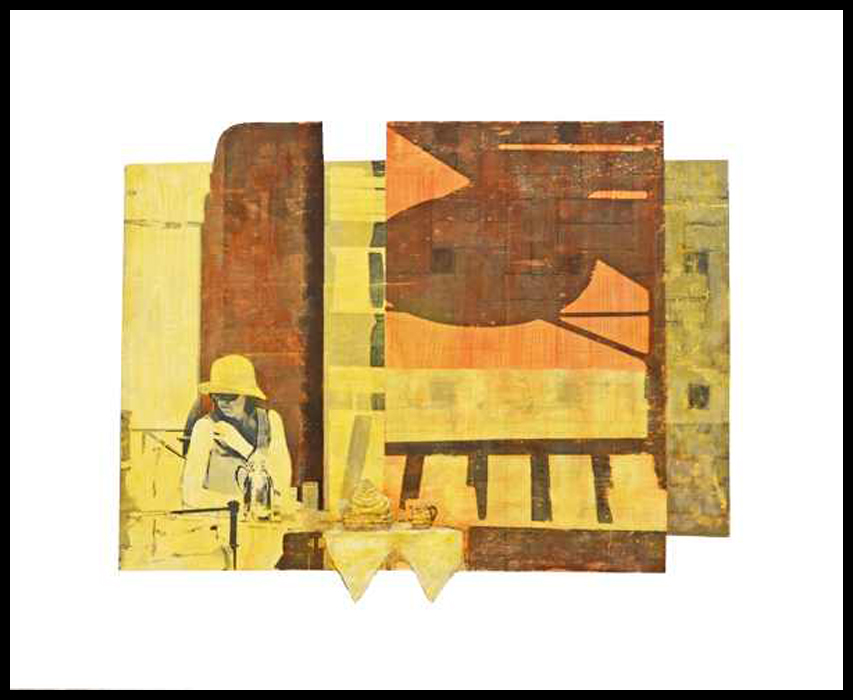
In Breakfast in Marrakech (above) I wanted to capture the sense of colour and strongly contrasting shadows typical found in Morocco.
Modern culture
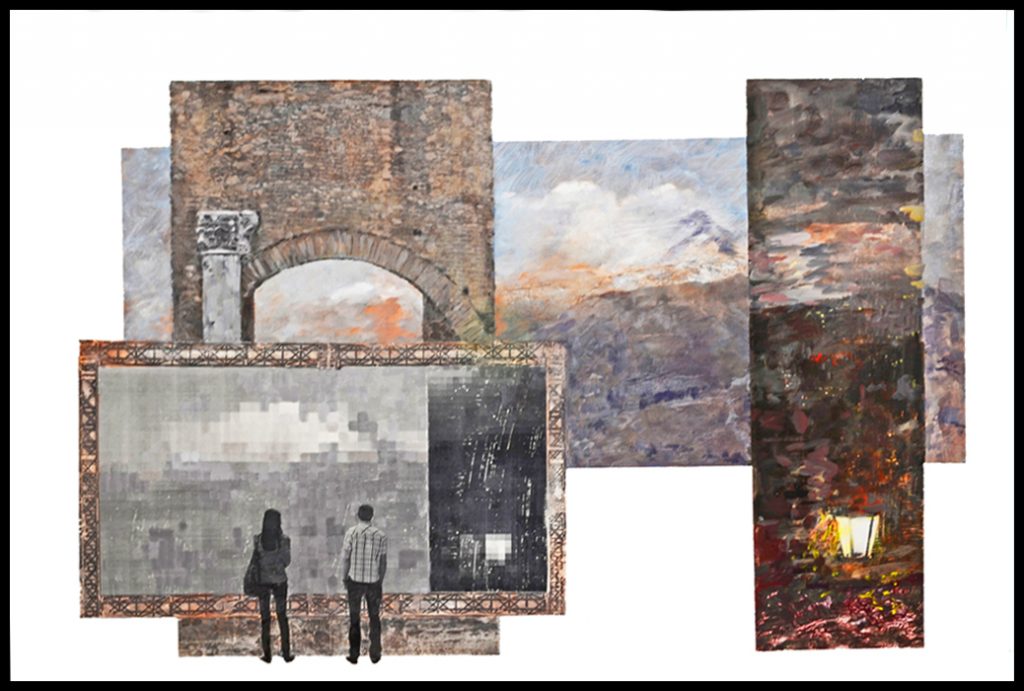
What You See Is What You Get (above) combines Roman ruins in Taormina, Sicily, with Etna’s beauty. This painting also joins day with night while commenting on a modern desire to view everything through a digital medium. So, not only was I taking inspiration from observation, and ancient architecture, I was also making references to modern culture.
The addition of political content
In terms of composition, Édouard Manet’s Le Déjeuner sur l’herbe influenced Legacy. But Manet’s work also steered me towards making paintings with political undertones.
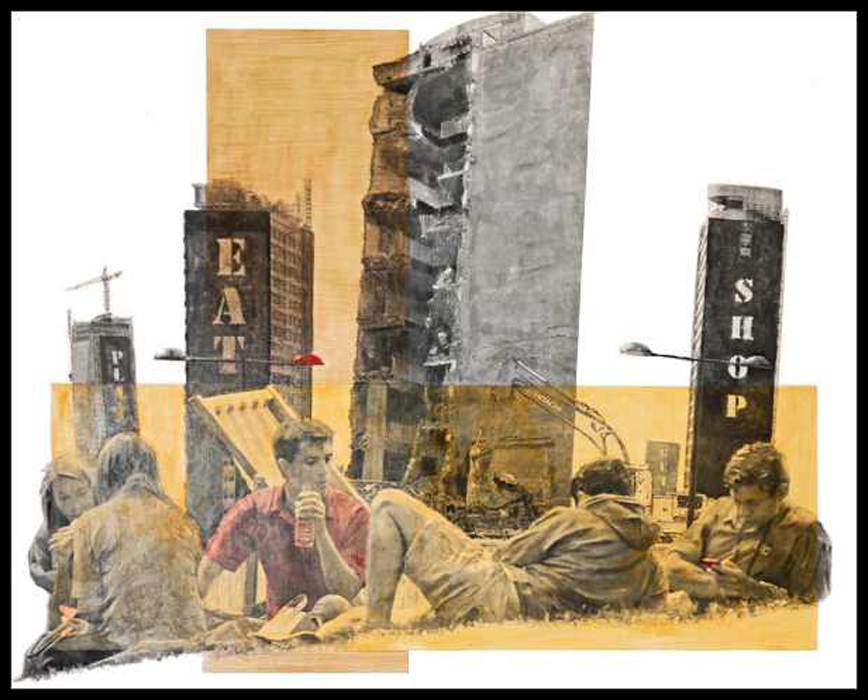
Legacy depicts a group of young people enjoying a lunch break in Green Park, London, during the course of London’s hosting of the 2012 Olympics. Some are using their phones. None of them speak to each other. Meanwhile in the background, a block of flats undergoes demolition (observed on a trip to Vienna). But the others, representations of those I observed in Stratford, East London, are decked out in large banners. In fact these towers were covered in advertising for the Olympics. I chose to change them by using consumerist watchwords, namely EAT, PLAY, and SHOP.
The title of the painting is a reference to those, like then Mayor of London, Boris Johnson, who claimed London would reap huge benefits from the billions spent on hosting the Olympics. At the time, I begged to differ, knowing Johnson’s reputation for dissembling the truth. My mind has not changed since then.
The die was cast, and I felt I had found a ‘voice’, a means of artistic expression for subject matter that I wished to pursue.
The central motif that I would continue to use to achieve this would be the human figure.